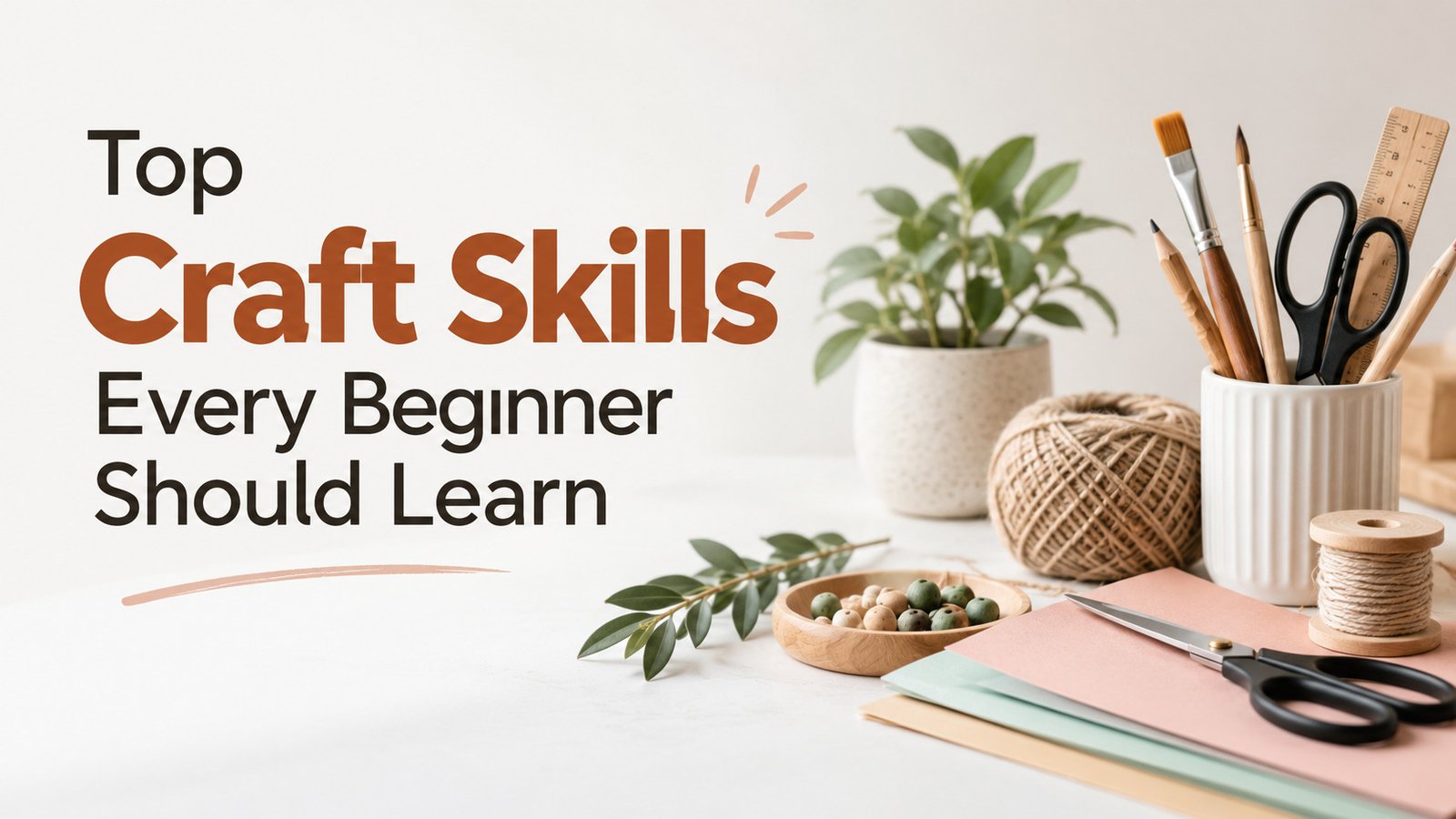
Top Craft Skills Every Beginner Should Learn
From AI integration to cross-platform fluency—discover the must-have technical and soft skills for today’s most in-demand dev roles.

by Satnam Singh
Want to turn your free time into something creative, practical, and rewarding? Learning the right craft skills can help you make beautiful handmade projects, develop useful DIY skills, and even discover a new hobby or income opportunity.
Crafting is more than simply making decorative objects. It can teach patience, precision, creativity, problem-solving, and attention to detail. Whether you are a complete beginner, a student looking for a creative hobby, or a professional wanting to explore something outside work, there are plenty of handmade crafts and crafting techniques worth learning.
The best part? Many beginner-friendly crafts require only a few inexpensive materials and can be learned at home through online tutorials, courses, and guided projects.
Why Should Beginners Learn Craft Skills?
Crafting provides a practical way to develop creativity while producing something tangible. Unlike passive entertainment, DIY projects encourage you to experiment, make decisions, solve problems, and improve through practice.
Learning creative skills through crafting can also have several practical benefits:
- Improves creativity: Craft projects encourage you to experiment with colors, shapes, textures, and designs.
- Develops patience: Many handmade projects require several careful steps.
- Builds practical skills: You learn how to measure, cut, assemble, decorate, and repair materials.
- Provides a relaxing hobby: Repetitive creative activities can offer a welcome break from screens and busy routines.
- Encourages self-expression: Handmade items can reflect your personality and artistic style.
- Creates income opportunities: Skilled crafters can sell handmade products, teach workshops, or create custom items.
For beginners, the key is to start with accessible techniques and gradually move toward more advanced projects.
Best Craft Skills for Beginners
There are countless crafting techniques to explore, but some are particularly suitable for people who are just starting. Here are some of the most useful craft skills for beginners.
1. Paper Crafting
Paper crafting is one of the easiest places to start because paper is affordable, widely available, and easy to work with.
Beginners can learn techniques such as:
- Origami
- Paper cutting
- Paper folding
- Scrapbooking
- Card making
- Paper flowers
- Quilling
- Paper collage
A simple sheet of colored paper can become a greeting card, decorative flower, wall decoration, bookmark, or gift box.
Why Learn Paper Crafts?
Paper crafting teaches fundamental skills such as folding, measuring, cutting, layering, and composition. These techniques can later be applied to more complex creative projects.
It is also an excellent choice for students because projects can usually be completed with basic stationery supplies.
2. Drawing and Sketching
Drawing is another foundational creative skill that can support almost every other type of craft.
You do not need to become a professional artist. Beginners can start with basic exercises involving:
- Lines and shapes
- Shading
- Perspective
- Proportions
- Simple objects
- Patterns
- Basic lettering
Regular sketching helps develop hand-eye coordination and visual observation.
Beginner Tip
Start by drawing everyday objects such as cups, books, leaves, bottles, or household items. Focus on observing shapes rather than trying to create a perfect drawing.
Over time, these skills can become useful for illustration, painting, product design, handmade decorations, and other creative activities.
3. Painting
Painting allows beginners to explore color, texture, composition, and artistic expression.
Popular beginner-friendly options include:
- Acrylic painting
- Watercolor
- Gouache
- Canvas painting
- Decorative painting
- Fabric painting
Acrylic painting is particularly versatile because it can be used on canvas, paper, wood, and several other surfaces.
Simple Beginner Project
Try painting a small canvas using three complementary colors. Begin with a simple background, add basic shapes, and gradually introduce details.
The goal at first should not be perfection. Instead, concentrate on understanding how colors interact and how different brush techniques affect the final result.
4. Sewing and Basic Stitching
Sewing is a practical DIY skill that can be useful well beyond crafting.
Beginners can start with basic hand-stitching techniques before moving to a sewing machine.
Important techniques include:
- Running stitch
- Backstitch
- Blanket stitch
- Hemming
- Basic embroidery
- Button attachment
- Simple fabric repairs
Once you become comfortable with basic stitching, you can create small pouches, decorative pieces, clothing alterations, cushions, and other fabric projects.
Why Sewing Is a Valuable DIY Skill
Basic sewing can help you repair damaged clothing rather than immediately replacing it. It can therefore become both a creative hobby and a practical everyday skill.
5. Knitting and Crochet
Knitting and crochet are popular textile crafts that can be learned progressively.
For beginners, the first goal should be mastering a few fundamental stitches rather than attempting a complicated project.
Common beginner projects include:
- Scarves
- Coasters
- Small baskets
- Headbands
- Dishcloths
- Simple blankets
Both crafts require patience and consistency, making them excellent ways to develop concentration.
Knitting vs. Crochet
| Feature | Knitting | Crochet |
|---|---|---|
| Main tool | Two needles | One hook |
| Beginner learning curve | Moderate | Often easier to start |
| Common projects | Sweaters, scarves | Blankets, baskets, accessories |
| Technique | Multiple live stitches | Usually one active loop |
| Material | Yarn | Yarn |
There is no need to choose permanently. Many crafters eventually learn both.
6. Woodworking Basics
Woodworking can seem intimidating, but beginners can start with small, simple projects.
Basic woodworking skills include:
- Measuring
- Marking
- Sanding
- Drilling
- Cutting
- Joining
- Finishing
Start with projects that do not require advanced machinery, such as a small shelf, picture frame, planter box, or simple organizer.
Safety Comes First
Always learn how to use tools correctly before starting a woodworking project. Wear appropriate protective equipment, maintain a clean workspace, and follow manufacturer instructions for power tools.
Woodworking can become an especially valuable skill for people interested in DIY home improvement.
7. Clay Modeling and Pottery
Working with clay introduces beginners to three-dimensional crafting.
You can start with air-dry clay, which generally does not require a kiln for basic projects.
Beginner projects can include:
- Small bowls
- Decorative ornaments
- Plant pots
- Figurines
- Jewelry dishes
- Wall decorations
Clay teaches you how to work with shape, volume, texture, and form.
Once you gain confidence, you can explore traditional pottery and wheel throwing.
8. Candle Making
Candle making combines crafting with basic design and product development.
Beginners can experiment with:
- Container candles
- Decorative candles
- Scent combinations
- Different wax types
- Wick selection
- Simple packaging
If you eventually want to sell handmade products, candle making can also introduce you to important concepts such as product presentation, branding, pricing, and customer preferences.
However, beginners should carefully follow the safety instructions provided by wax, fragrance, and equipment manufacturers.
9. Jewelry Making
Jewelry making is a flexible craft that can range from very simple projects to advanced metalworking.
Beginners can start with:
- Beaded bracelets
- Necklaces
- Earrings
- Friendship bracelets
- Wire-wrapped jewelry
- Simple charms
You can experiment with beads, cords, wire, gemstones, and other decorative materials.
Because jewelry is relatively small, it is also convenient for people with limited workspace.
10. Upcycling and DIY Crafts
Upcycling involves creatively reusing existing objects or materials instead of throwing them away.
For example, an old:
- Glass jar can become a storage container.
- Wooden box can become a decorative organizer.
- T-shirt can become a reusable bag.
- Cardboard box can become a desk organizer.
- Bottle can become a decorative planter.
Upcycling combines DIY skills, creativity, and resourcefulness.
It can also encourage beginners to think differently about everyday objects and discover new uses for materials they already have.
How to Choose the Right Craft Skill
With so many options available, beginners sometimes struggle to decide where to start.
Consider these questions:
What interests you most?
If you enjoy fashion, try sewing or jewelry making. If you like home décor, consider woodworking, painting, or clay crafts.
What materials do you already have?
Starting with materials you already own can reduce the cost of learning.
How much space do you have?
Paper crafts, drawing, jewelry making, and crochet require relatively little space. Woodworking may require considerably more.
How much time can you dedicate?
If you have only 15–20 minutes a day, choose a craft that can be practiced in short sessions.
Do you want a hobby or an income opportunity?
If your long-term goal is to sell handmade products, consider crafts that can be produced consistently and customized for customers.
A Simple Craft Learning Plan for Beginners
You don’t need to learn everything at once. A structured approach can make the process easier.
Week 1: Explore
Choose two or three craft categories that interest you. Watch beginner tutorials and understand the basic materials and tools.
Week 2: Learn the Fundamentals
Select one craft and practice its fundamental techniques.
For example, someone learning crochet might focus only on holding the hook, creating a starting chain, and learning basic stitches.
Week 3: Complete a Small Project
Create your first finished item. Keep the project simple enough that you can complete it without becoming overwhelmed.
Week 4: Improve and Experiment
Repeat the project while changing one element, such as color, material, size, pattern, or design.
This process helps turn basic knowledge into practical skill.
Tips for Learning Crafting Techniques Faster
Learning a craft is primarily about practice. These strategies can make the process more effective:
Start small. Avoid choosing a complicated project as your first attempt.
Practice consistently. Ten to twenty minutes of regular practice can be more useful than one long session every few weeks.
Follow structured tutorials. A good beginner course can help you avoid common mistakes.
Keep your first projects. Looking back at earlier work helps you see how much your skills have improved.
Don’t chase perfection. Mistakes are part of the learning process.
Experiment gradually. Once you understand a basic technique, modify it and create your own variations.
Build a craft toolkit slowly. You don’t need to purchase every tool immediately. Buy equipment as your projects become more advanced.
Can Craft Skills Become a Career?
Absolutely. While not every hobby becomes a business, several handmade crafts can develop into income-generating opportunities.
Potential paths include:
- Selling handmade products online
- Creating customized gifts
- Teaching craft workshops
- Selling digital craft patterns
- Creating DIY content
- Running craft classes
- Designing craft kits
- Building a handmade product brand
For example, someone who learns jewelry making could begin by creating pieces for friends and family, then develop a small product collection and eventually explore online sales.
The important distinction is between learning a craft and building a craft business. A business requires additional skills such as pricing, marketing, photography, customer service, inventory management, and financial planning.
Final Thoughts
Learning craft skills is an accessible way to develop creativity, patience, practical knowledge, and problem-solving abilities. From paper crafts and drawing to sewing, woodworking, crochet, clay modeling, and upcycling, there is a creative skill for almost every interest and experience level.
You don’t need expensive equipment or years of experience to begin. Choose one craft, learn the fundamentals, complete a small project, and gradually challenge yourself with more advanced crafting techniques.
Most importantly, enjoy the process. The goal of learning creative skills isn’t simply to produce something perfect—it is to become more confident in creating something yourself.
Ready to learn something new? Explore more skill-based learning resources on eLearningsHub.com, discover practical courses, compare learning opportunities, and continue building skills that can benefit both your personal and professional life.