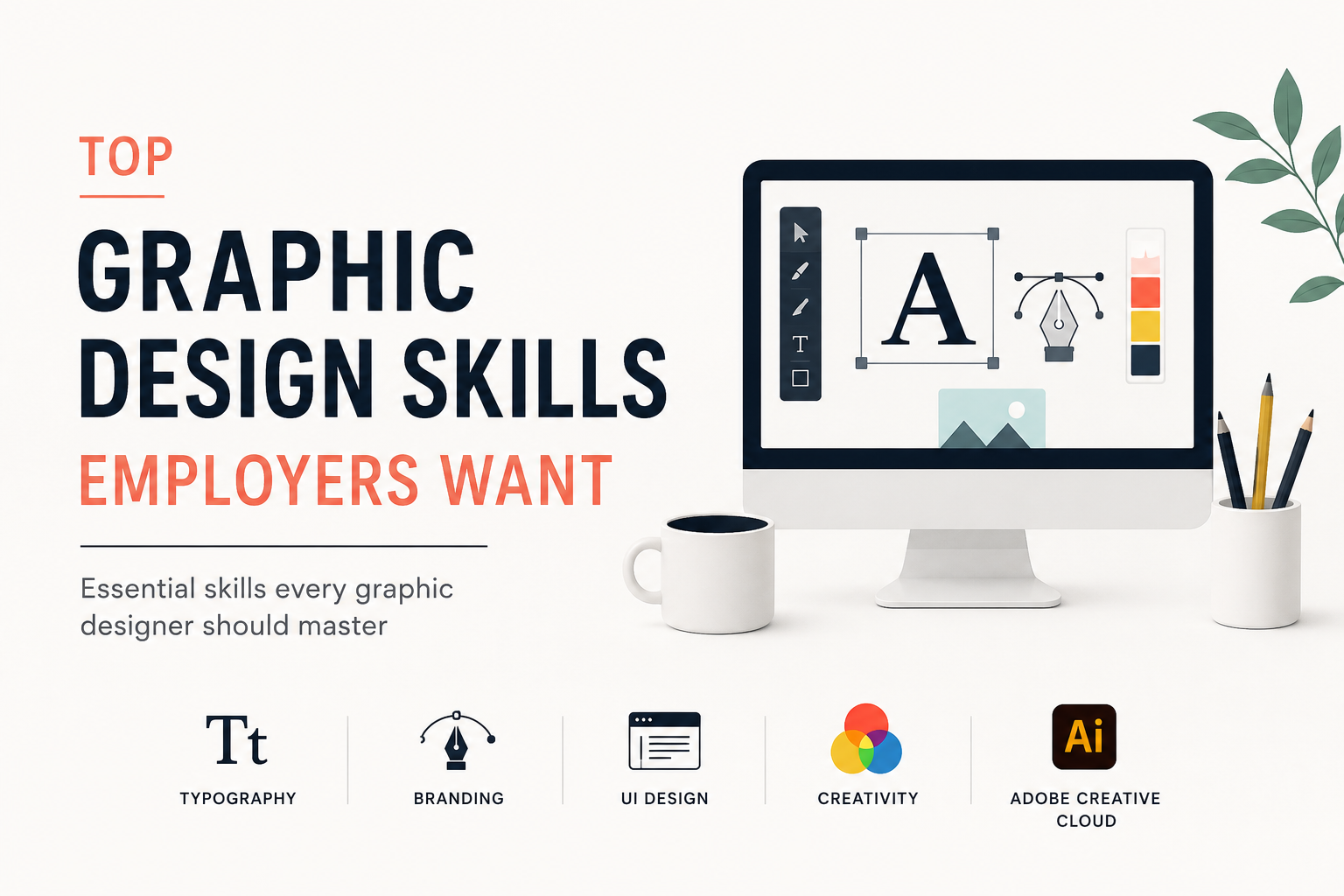
Top Graphic Design Skills Employers Want in 2026
From AI integration to cross-platform fluency—discover the must-have technical and soft skills for today’s most in-demand dev roles.

by Satnam Singh
Graphic design is no longer just about making things look attractive. Today’s employers expect graphic designers to combine creativity, technical expertise, problem-solving abilities, and user-focused thinking to create impactful visual experiences. Whether you’re applying for your first design job, transitioning into a creative career, or upgrading your professional portfolio, mastering the right skills can significantly improve your employability.
The demand for skilled graphic designers continues to grow across industries such as digital marketing, technology, eCommerce, advertising, publishing, gaming, education, and media. Companies are actively searching for professionals who can create compelling visual content that strengthens brands, improves user experiences, and drives business results.
In this guide, we’ll explore the top graphic designer skills employers want, explain why each skill matters, and provide practical tips to help you develop these in-demand abilities.
Why Graphic Designer Skills Matter in Today’s Job Market
Modern businesses rely heavily on visual communication. Every website, mobile app, social media campaign, product package, and advertisement depends on effective design.
Employers are looking for graphic designers who can:
- Create visually appealing marketing materials
- Build consistent brand identities
- Design user-friendly digital experiences
- Collaborate with cross-functional teams
- Solve communication problems creatively
- Stay updated with evolving design trends
Simply knowing design software is no longer enough. Employers value professionals who combine technical skills, creative thinking, and business awareness.
1. Creativity: The Foundation of Great Design
Creativity remains one of the most valuable graphic designer skills. However, creativity isn’t just artistic talent—it’s the ability to solve communication challenges visually.
Creative designers can:
- Transform ideas into engaging visuals
- Tell compelling stories through design
- Develop unique concepts
- Adapt designs for different audiences
- Think beyond templates
How to Improve Creativity
- Study award-winning designs
- Practice daily design challenges
- Explore different art styles
- Learn color psychology
- Build passion projects
Real-World Example
A marketing agency needs a campaign targeting Gen Z users. Rather than using traditional advertising layouts, a creative designer develops interactive social media graphics inspired by current online trends, leading to higher engagement.
2. Typography: Communicating Through Text
Typography is one of the most overlooked yet essential design skills. It influences readability, branding, accessibility, and user experience.
Good typography includes:
- Font selection
- Font pairing
- Hierarchy
- Spacing
- Alignment
- Line height
- Readability
Employers expect designers to understand how typography affects communication.
Best Practices
- Limit font families
- Create clear visual hierarchy
- Use whitespace effectively
- Maintain consistency
- Prioritize readability over decoration
Popular Typography Tools
- Adobe Fonts
- Google Fonts
- FontPair
- Typewolf
3. Branding and Visual Identity
Strong branding skills are highly valued because companies compete through recognizable visual identities.
A designer involved in branding creates:
- Logos
- Color palettes
- Typography systems
- Brand guidelines
- Marketing assets
- Social media templates
- Packaging
Employers appreciate designers who understand how every visual element contributes to a consistent brand experience.
Essential Branding Skills
- Brand strategy
- Visual storytelling
- Color psychology
- Logo design
- Consistency across platforms
4. Mastering Adobe Creative Cloud
Nearly every graphic design job lists Adobe Creative Cloud as a required skill.
The most commonly used applications include:
| Software | Primary Use |
|---|---|
| Adobe Photoshop | Photo editing and digital artwork |
| Adobe Illustrator | Vector graphics and logos |
| Adobe InDesign | Books, magazines, brochures |
| Adobe XD | UI/UX wireframes and prototypes |
| Adobe After Effects | Motion graphics |
| Adobe Lightroom | Photography editing |
Why Employers Value Adobe Creative Cloud
Adobe tools are industry standards that allow designers to collaborate efficiently with marketing teams, developers, photographers, and content creators.
Tips to Improve
- Learn keyboard shortcuts
- Practice real-world projects
- Create portfolio-ready work
- Complete Adobe certification courses
5. UI Design Skills
Digital products require designers who understand UI design principles.
UI (User Interface) design focuses on creating visually appealing and intuitive interfaces for:
- Websites
- Mobile apps
- Dashboards
- SaaS products
- Digital platforms
Employers increasingly prefer graphic designers who possess basic UI design knowledge.
Core UI Design Principles
- Layout
- Consistency
- Accessibility
- Responsive design
- Visual hierarchy
- Interactive components
Popular UI Design Tools
- Figma
- Adobe XD
- Sketch
- Framer
6. Color Theory and Visual Psychology
Colors influence emotions, purchasing decisions, and user behavior.
Professional designers understand:
- Color harmony
- Contrast
- Brand colors
- Accessibility standards
- Emotional associations
Example
A healthcare company often uses blue because it represents trust, reliability, and professionalism, while children’s brands frequently use bright colors to evoke excitement and energy.
7. Layout and Composition
A beautiful design depends on strong composition.
Employers value designers who understand:
- Grid systems
- Balance
- Alignment
- Whitespace
- Proximity
- Visual flow
Well-organized layouts improve readability and guide users toward important information.
8. Communication Skills
Graphic designers rarely work alone.
You’ll collaborate with:
- Marketing teams
- Developers
- Content writers
- Product managers
- Clients
- Brand managers
Effective communication helps designers understand project goals, explain creative decisions, and incorporate feedback professionally.
9. Problem-Solving Mindset
Graphic design is fundamentally about solving problems.
Instead of asking:
“How can I make this look better?”
Professional designers ask:
“How can I communicate this message more effectively?”
Employers value designers who can identify challenges and propose practical visual solutions.
10. UX Awareness
While UI design focuses on appearance, UX (User Experience) emphasizes usability.
Understanding UX helps designers create:
- Easier navigation
- Better information architecture
- Accessible interfaces
- Higher user satisfaction
Even entry-level graphic designers benefit from learning UX fundamentals.
11. Motion Graphics Basics
Short videos and animated content dominate modern digital marketing.
Knowing motion graphics gives candidates a competitive advantage.
Useful skills include:
- Animated social media posts
- Logo animations
- GIF creation
- Promotional videos
- Explainer animations
Adobe After Effects is commonly used for these projects.
12. Portfolio Development
Employers often evaluate portfolios before resumes.
A strong portfolio should demonstrate:
- Branding projects
- Typography work
- UI design
- Print design
- Digital marketing assets
- Case studies
- Design process
Quality matters more than quantity.
13. Time Management
Professional designers frequently manage multiple projects simultaneously.
Employers appreciate designers who:
- Meet deadlines
- Prioritize tasks
- Organize files
- Estimate project timelines
- Communicate delays early
Project management skills improve productivity and client satisfaction.
14. Staying Updated with Design Trends
Design evolves rapidly.
Current trends include:
- Minimalist interfaces
- Bold typography
- AI-assisted design
- 3D illustrations
- Glassmorphism
- Dark mode interfaces
- Variable fonts
- Accessible design
Continuous learning helps designers remain competitive.
15. Basic Marketing Knowledge
Modern graphic designers often work alongside marketing teams.
Understanding marketing concepts helps create visuals that support business goals.
Useful knowledge includes:
- Social media marketing
- Digital advertising
- SEO-friendly graphics
- Conversion optimization
- Email marketing design
- Landing page design
Designers who understand customer psychology create more effective visual campaigns.
Comparison: Essential Graphic Designer Skills
| Skill | Why Employers Want It | Career Impact |
|---|---|---|
| Creativity | Original ideas and problem-solving | High |
| Typography | Better readability and branding | High |
| Branding | Consistent business identity | High |
| Adobe Creative Cloud | Industry-standard software expertise | Essential |
| UI Design | Digital product design | High |
| Color Theory | Emotional visual communication | Medium-High |
| Layout & Composition | Professional visual organization | High |
| Communication | Better teamwork and client interaction | High |
| UX Awareness | Improved usability | Medium-High |
| Motion Graphics | Rich digital content creation | Growing |
How to Build These Graphic Designer Skills
If you’re starting your design journey, follow a structured learning plan:
Step 1
Learn design fundamentals:
- Typography
- Color theory
- Layout
- Composition
Step 2
Master Adobe Creative Cloud.
Focus on:
- Photoshop
- Illustrator
- InDesign
Step 3
Learn modern UI design tools like Figma or Adobe XD.
Step 4
Build real-world projects.
Examples include:
- Brand identity kits
- Mobile app interfaces
- Website landing pages
- Social media campaigns
- Packaging concepts
Step 5
Publish your portfolio online and continuously update it with your best work.
Career Opportunities for Skilled Graphic Designers
Professionals with strong graphic design skills can pursue roles such as:
- Graphic Designer
- Brand Designer
- UI Designer
- Visual Designer
- Marketing Designer
- Motion Graphics Designer
- Creative Designer
- Digital Designer
- Packaging Designer
- Art Director (with experience)
These roles are available across startups, agencies, multinational companies, educational institutions, healthcare organizations, and technology firms.
Final Thoughts
The modern graphic design industry rewards professionals who combine creativity, typography expertise, branding knowledge, UI design principles, and proficiency in Adobe Creative Cloud. Employers are looking for adaptable designers who can solve problems, collaborate effectively, and create impactful visual experiences across digital and print platforms.
Rather than focusing on software alone, invest time in understanding design principles, building a compelling portfolio, and continuously improving your skills through practice and professional development. By mastering these in-demand graphic designer skills, you’ll be well-positioned for exciting career opportunities in an increasingly design-driven world.
Ready to Start Your Graphic Design Career?
Explore more expert guides, compare top online graphic design courses, discover industry-recognized certifications, and stay updated with the latest design trends on eLearningsHub.com. Whether you’re a beginner or an experienced creative professional, continuous learning is the key to building a successful and rewarding design career.